The Itch: An Uncomfortable Truth About Modern Life; and What I’m Doing About it


When I was born, my dad wasn’t there. He had flown out of Bolivia a few months earlier. When the doctor asked who the father was in the delivery room, my aunt stepped in and answered. It’s an anecdote that is now told in my family between laughs, but it points to a reality that has always made me uncomfortable.
And no, my dad wasn’t a neglectful man who abandoned his child and pregnant wife. He had won a scholarship to study in the UK, and later got a job. I met him in person for the first time when I was almost 3 years old. I can’t imagine how difficult it must have been to leave my mum and brother back home. In our family narrative, it was framed as a sacrifice, where family separation was the price we all had to pay to have some level of financial security.
As a kid, I was full of questions. Why did my dad have to be away from me? Why couldn’t he visit more than once a year? Why couldn’t he stay longer than three weeks? Whenever I asked, I never got a real explanation, only answers that made me feel even worse: “It’s just the way it is”, “it’s necessary”, “it’s normal”. And that unsettling feeling didn’t go away. It grew and stayed, like an itch.
The itch isn’t just a vague sadness. It’s a noticeable, persistent, and sometimes painful sensation that shows up whenever I see that human disconnection is treated as normal or necessary. It has many textures. Sometimes it’s gentle, almost innocent, like when my older brother started school and I missed him during the day. Sometimes it’s irritating, like when someone stops talking to me to check social media on their phone.
And more often than I’d like, the itch arrives as real, memorable pain: every time I said goodbye to my dad as a child after three fun weeks together; the time I broke up with a long-distance girlfriend partly because there was no way around immigration rules; every time a friend had to move cities for a new job. And later, when I found myself in a position uncomfortably similar to my dad’s. Having to leave my own family and friends behind in search of a more secure future was painfully itchy.
The itch has always been strong enough to notice, but so constant that sometimes I forget that it’s even there. But it keeps coming back. For a long time, I treated it as something to tolerate. Something to manage. But eventually I realised something important:
The itch isn’t just a sensation, it’s a signal.
This persistent discomfort has been pointing at something real. It is not something I can simply scratch to make it go away, it’s a symptom of a chronic condition. One that is not in my body, but in modern life. A world that forces people to constantly leave their loved ones in search of stability isn’t built for connection.
I refuse to believe that human disconnection is normal or necessary. Instead, it’s a design flaw from the way we’ve built our society. While modern life has freed us from many historical constraints, it has also normalised isolation and disconnection. That’s a trade-off I’m no longer willing to accept.
What I’m doing about it
I once heard a phrase that stuck with me: “The best way to complain is to take action.”
I can’t redesign society from scratch (no pun intended), but for now, I can do two things:
- Redesign my own life
- Share what I learn so others can redesign theirs
In this blog, I will share the various changes and experiments I’ve been implementing to build a more connected life. Examples:
- Auditing how I allocate time, energy, attention, and skills
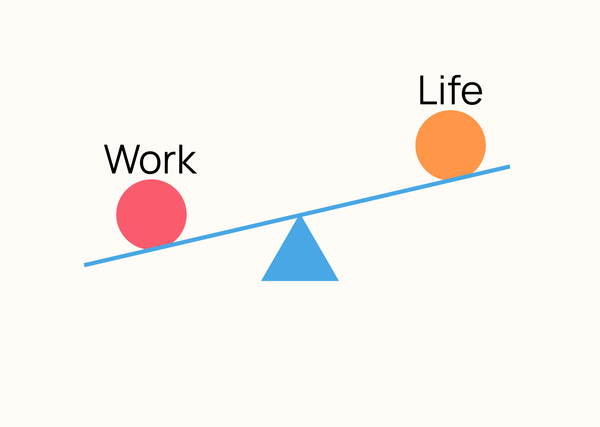
- What I am doing to balance work, ambition, hobbies, and relationships
- My reflections on the dynamics of relationships
I’m learning out loud and building in public. I’ll be creating resources to help me and others find, build and maintain relationships. This includes tools, frameworks, guides and experiments.
I don’t believe I’m the only one feeling this itch. And I also don’t believe I’m the only one doing something about it. If you found this relatable, please share your experiences, thoughts and ideas to diegocortez.queries@gmail.com. Or comment below.